Skip navigation, go to main content
Minor oral surgery

Wisdom tooth extraction

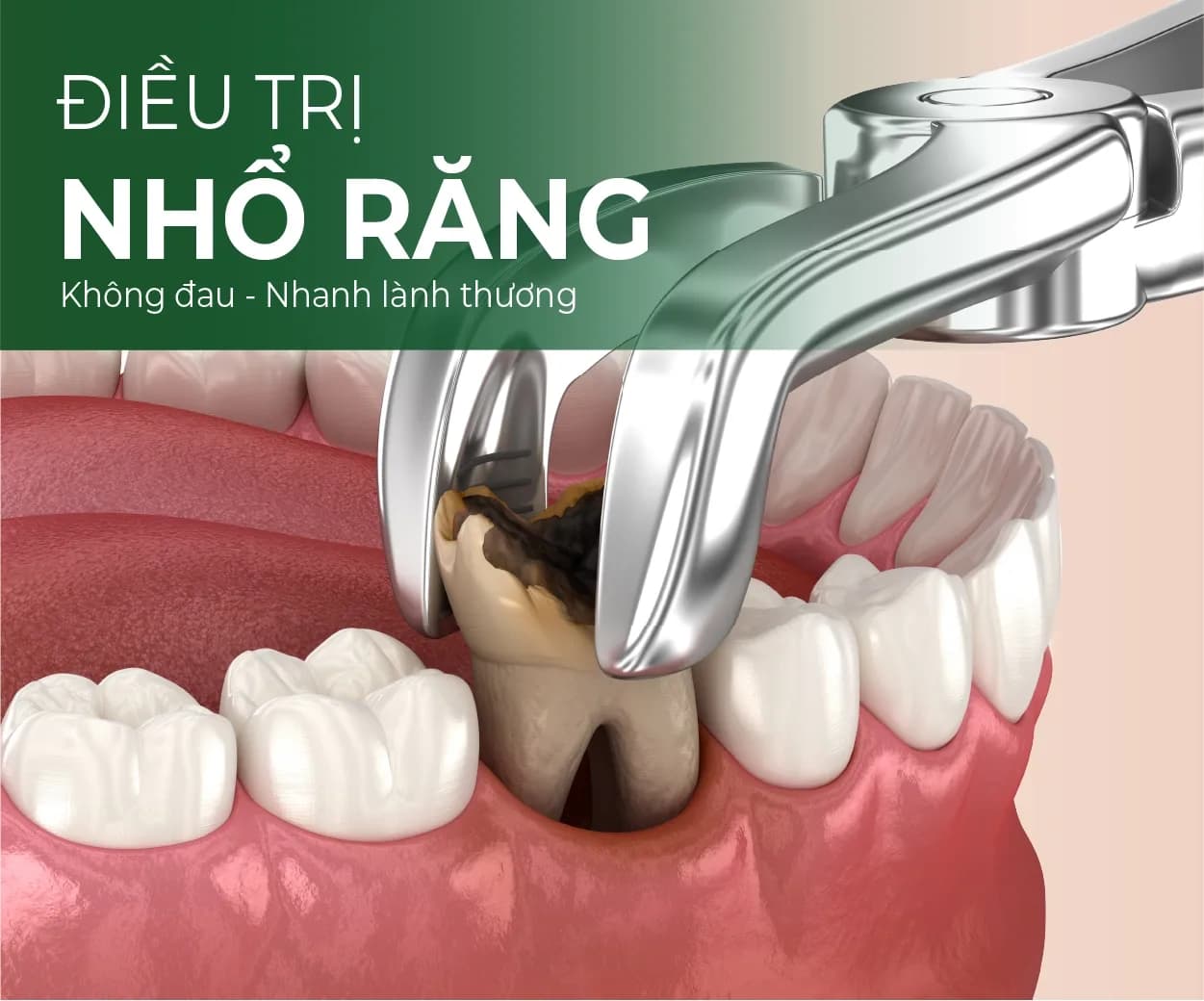
An impacted or misangled wisdom tooth is a common cause of pericoronitis, of decay in the second molar beside it, and of crowding across the whole arch. Dental Việt Nam uses a Piezotome ultrasonic unit that cuts hard tissue selectively — it acts on bone without tearing the soft tissue the way a rotary handpiece can.

Indicative cost

1,200,000 5,000,000 per tooth

Duration
15 – 45 minutes per tooth
Appointments
1 appointment
Anaesthetic
Local anaesthetic
Warranty
Free review and suture removal
Wisdom tooth extraction at Dental Việt Nam

Wisdom tooth extraction at Dental Việt Nam costs from 1,200,000₫ to 5,000,000₫ per tooth, takes 15 – 45 minutes per tooth, and is warranted for free review and suture removal. Prices include VAT and are the same at every clinic; the initial examination and panoramic X-ray are free. It suits patients with a wisdom tooth angled or impacted into the second molar and repeated pericoronitis, with pain and a swollen cheek.

Who this is right for

  1. A wisdom tooth angled or impacted into the second molar
  2. Repeated pericoronitis, with pain and a swollen cheek
  3. A wisdom tooth too decayed or broken to restore
  4. Before orthodontic treatment, to create space and prevent later crowding

Who should not have this

  • Acute infection not yet controlled with antibiotics
  • The first and third trimesters of pregnancy
  • Bleeding disorders, or anticoagulant medication not yet cleared by your physician

If you fall into this group, the dentist will propose a more suitable option rather than proceeding anyway. It is exactly why the first appointment always includes an X-ray.

The clinical detail

What to understand before deciding on Wisdom teeth

Three points a dentist usually ends up explaining in the chair — read them first and your consultation can get straight to the point.

Not every wisdom tooth needs removing, but an impacted one almost always does

A wisdom tooth that has come in straight, has room, meets an opposing tooth and that you can clean properly should absolutely be kept. It is an ordinary molar and there is no medical reason to take it out.

The problem is the angled tooth, usually tilted forward into the back surface of the second molar. That contact point is a food trap a toothbrush can never reach. And the consequence does not fall on the wisdom tooth — it falls on the second molar, the main chewing tooth you need for life. Decay on the distal surface of a second molar caused by a wisdom tooth is one of the saddest reasons for extraction in dentistry, precisely because it was entirely preventable.

So the working principle is neither "all wisdom teeth come out" nor "wait until it hurts". It is: take an X-ray, look at the angle, and if that tooth is harming or will certainly harm the tooth beside it, remove it early, while you are young and bone heals quickly.
The inferior alveolar nerve — why the CT scan is not an upsell

Running through the lower jaw is the nerve canal that supplies sensation to the lower lip, the chin and the lower teeth. The roots of a lower wisdom tooth can sit close to it, touch it, or even wrap around it.

A panoramic X-ray is a two-dimensional image, so when a root appears to overlap the canal, it cannot tell you whether the tooth lies inside or outside it. A Cone Beam CT reconstructs it in three dimensions and answers that question precisely, with the actual distance in millimetres.

The difference in management is substantial. Where there is a safe margin, removal proceeds normally. Where the roots hug the canal, the tooth is sectioned and lifted out in pieces, or in some cases a coronectomy is considered — removing the crown and leaving the root safely in place rather than forcing the whole tooth out. Permanent lip numbness is among the most distressing complications there is, and most of it is prevented at the stage of reading the scan.

Dry socket — the worst pain after an extraction, and how it happens

Once the tooth is out, a blood clot forms in the socket. That clot covers the bone and the nerve endings underneath, and it is also the scaffold new tissue grows into. It is the body's own dressing.

If the clot is dislodged or breaks down early, the bone of the socket is left exposed to the mouth. The pain typically appears on day 3 to day 5, increasing rather than decreasing, radiating to the ear and temple, and ordinary painkillers barely touch it. This is dry socket.

The three things that most often dislodge the clot are all within your control: smoking, using a straw, and rinsing vigorously or spitting in the first 24 hours. That is why the seemingly trivial instructions after an extraction matter more than which medication you were prescribed.

What is different here

How we do Wisdom teeth

Piezotome ultrasonic unit

Cuts hard tissue selectively without catching soft tissue — a cleaner wound, less bleeding and noticeably less swelling.

Located with Cone Beam CT

The position of the inferior alveolar nerve canal is established before removal, avoiding prolonged lip numbness.

A dedicated sterile surgery room

Separate from the general treatment area, with Class B autoclaved instruments and full infection-control protocol.

Follow-up by Zalo

The dentist messages you on day 1 and day 3, with suture removal at day 7.

The process

4 steps

You know in advance what happens and how long each stage takes.

Before you come in

Eat properly before you come — you will find eating difficult for some hours afterwards, and an empty stomach raises the risk of feeling faint during surgery. Book a morning appointment and avoid the weekend before something important, because swelling peaks on the second day. Tell us in advance if you take anticoagulants, oral contraceptives or bone-density medication, or if you are having your period. Buy congee, soup, milk and a cold pack before you come. Do not take antibiotics beforehand "just in case" — it makes diagnosis harder.

  1. 01

    Examination and Cone Beam CT

    30 minutes

    Assessing the angle of eruption, root depth and the relationship to the nerve canal.

  2. 02

    Anaesthetic and access

    10 minutes

    Regional anaesthetic and a minimal incision to expose the part of the tooth that needs removing.

  3. 03

    Sectioning and removal

    15 – 30 minutes

    The Piezotome sections the crown and roots into small pieces, which are lifted out gently — no chiselling or tapping.

  4. 04

    Irrigation, suturing and instructions

    15 minutes

    The socket is irrigated and sutured, gauze placed for haemostasis, and prescriptions issued with detailed aftercare.

Aftercare

What to do at each stage

Most complications do not come from the treatment itself but from the days that follow. This is the guidance you are given when you leave.

First 24 hours — the most important

Do

  • Bite firmly on gauze for 30 to 45 minutes, replacing it if oozing continues
  • Cold compress on the cheek, 15 minutes each hour
  • Cool, soft, liquid food: congee, soup, milk, smoothies eaten with a spoon
  • Take the prescribed medication as the anaesthetic starts to wear off

Avoid

  • Rinsing, spitting, using a straw — the three things that most often cause dry socket
  • Smoking and alcohol
  • Hot food, spicy food, strenuous activity, saunas
  • Touching the socket with your tongue or fingers

Days 2 – 3 — peak swelling

Do

  • Switch to warm compresses to disperse the bruising
  • Rinse gently with saline after meals
  • Brush normally elsewhere, avoiding the sutures directly

Avoid

  • Panicking that your cheek is more swollen than on day one — that is the normal course
  • Stopping the antibiotics because you feel better

Days 4 – 7

Do

  • Gradually return to chewing on the untreated side
  • Attend the suture removal appointment, usually on day 7

Avoid

  • Chewing directly on the extraction site
  • Skipping suture removal because the pain has gone

Signs to come back immediately

Do

  • Pain increasing from day three rather than decreasing
  • Fever above 38°C, swelling spreading to the neck, difficulty swallowing or opening your mouth
  • Bleeding that will not stop after two hours of continuous pressure on gauze
  • Lip or chin numbness lasting more than 24 hours after the anaesthetic wears off

Avoid

  • Waiting a few more days to see if it settles
  • Increasing the painkiller dose yourself
Cost

What it costs, and what decides that

Five things that decide the final figure

  1. The angle and depth of the tooth

    This is the deciding factor. A straight tooth is out in 15 minutes. An angled tooth needs an incision and sectioning. A tooth fully impacted in bone needs bone removal — the work and the time differ several-fold, which is why the price runs from 1.2 to 5 million₫.

  2. Root anatomy

    Straight, converged roots come out cleanly. Hooked, splayed or bone-encircling roots have to be divided and removed one at a time.

  3. How much imaging is required

    A panoramic X-ray is enough for a simple case. A case where the roots relate to the nerve canal or the maxillary sinus needs a Cone Beam CT — mandatory for safety, not optional.

  4. How many teeth in one appointment

    Removing two teeth on the same side in one visit means one recovery rather than two, and usually costs less than two separate appointments.

Comparing the options

Piezotome ultrasonic removal versus a conventional handpiece

The same tooth comes out either way, but the two act on tissue differently — and the difference shows most clearly in the days after you go home.

Piezotome ultrasonic removal versus a conventional handpiece
CriterionPiezotome ultrasonicConventional handpiece / chisel
How it worksUltrasonic vibration cutting hard tissue selectively, without catching soft tissueA rotating bur that can catch and tear soft tissue if it slips
What it feels likeNo chiselling, no tappingChiselling and tapping against bone
Swelling and pain afterwardsMarkedly lessMore, and for longer
Healing timeFasterSlower
Time in the chairCan be slightly longerFaster on straightforward cases

The dentist's conclusion

For a straight, easily removed wisdom tooth the two techniques give comparable results. The difference becomes pronounced with angled teeth, teeth impacted in bone, or teeth close to the nerve canal — which is exactly the group that makes up most extractions. In that group, not having bone chiselled is a difference you feel for the whole week afterwards.

Risks

Possible complications and how they are prevented

No medical technique carries zero risk. What makes the difference is knowing in advance where the risk sits and controlling it with a specific protocol.

Dry socket

Cause
The blood clot dislodged early by smoking, using a straw, rinsing vigorously or spitting in the first 24 hours.
Prevention
Bite firmly on gauze for the full 30 to 45 minutes, do not rinse on the first day, and stop smoking for at least 72 hours. If it does happen, the clinic treats it by irrigating and dressing the socket — the pain settles quickly once it is managed properly.

Prolonged numbness of the lip or chin

Cause
Roots sitting against or touching the inferior alveolar nerve, disturbed during removal.
Prevention
A Cone Beam CT beforehand in every suspicious case; sectioning the tooth and lifting it out in pieces rather than elevating it whole; and considering a coronectomy in very high-risk cases.

Post-operative infection

Cause
Poor hygiene, debris left in the socket, or stopping the antibiotics part-way through.
Prevention
Thorough irrigation and closure of the socket; completing the full course of medication; and coming back immediately if swelling increases, you develop a fever, or there is discharge after day three.

Oro-antral communication with the maxillary sinus

Cause
The roots of an upper wisdom tooth sitting against the sinus floor, leaving an opening when removed.
Prevention
Assess the relationship to the sinus on the pre-operative film and work gently so a root is not pushed upwards. A small opening closes on its own; a larger one needs suturing, and you must not blow your nose forcefully for two weeks.

Prolonged bleeding

Cause
A bleeding disorder, anticoagulant medication, or rinsing and physical activity too soon.
Prevention
Disclose all medication before the procedure; bite on gauze correctly; rest, keep your head raised and avoid exertion for the first day.
Frequently asked

Questions about Wisdom teeth

There is no pain during the procedure itself thanks to the local anaesthetic. Once it wears off there is mild to moderate pain for the first 2 to 3 days, well controlled with ordinary painkillers and cold compresses in the first 24 hours.

Book today,
and find out exactly where your teeth stand

A dentist examines you, takes a panoramic X-ray and explains what it shows using your own images. Free, even if you decide not to go ahead.

Open Monday – Sunday · 08:30 – 20:00 · Clinic in Hanoi

Zalo