
Skip navigation, go to main content
General treatment

General dentistry

Every cosmetic case that looks good and lasts starts from a healthy mouth. General dentistry at Dental Việt Nam deals with the underlying problems: removing calculus, restoring decayed tooth structure, treating root canals to save natural teeth, and controlling gum disease before any cosmetic work begins.

Indicative cost

300,000 3,000,000 per tooth

Duration
30 – 90 minutes
Appointments
1 – 3 appointments
Anaesthetic
Depends on the procedure
Warranty
2 years on fillings, 5 years on root canals
General dentistry at Dental Việt Nam

General dentistry at Dental Việt Nam costs from 300,000₫ to 3,000,000₫ per tooth, takes 30 – 90 minutes, and is warranted for 2 years on fillings, 5 years on root canals. Prices include VAT and are the same at every clinic; the initial examination and panoramic X-ray are free. It suits patients with calculus, plaque, or gums that bleed when you brush and decay, or sensitivity to hot, cold or sweet food.

Who this is right for

  1. Calculus, plaque, or gums that bleed when you brush
  2. Decay, or sensitivity to hot, cold or sweet food
  3. Spontaneous pain, or pain at night — signs of pulp inflammation
  4. Six-monthly check-ups for the whole family
The clinical detail

What to understand before deciding on General dentistry

Three points a dentist usually ends up explaining in the chair — read them first and your consultation can get straight to the point.

Decay caught early needs no drilling; caught late it costs you the nerve

Decay is a continuous process, not an on-off state. It starts as demineralisation in the enamel — at this stage it is only a chalky white patch with no cavity, and it is entirely reversible with topical fluoride and a change in eating habits. No drilling, no filling.

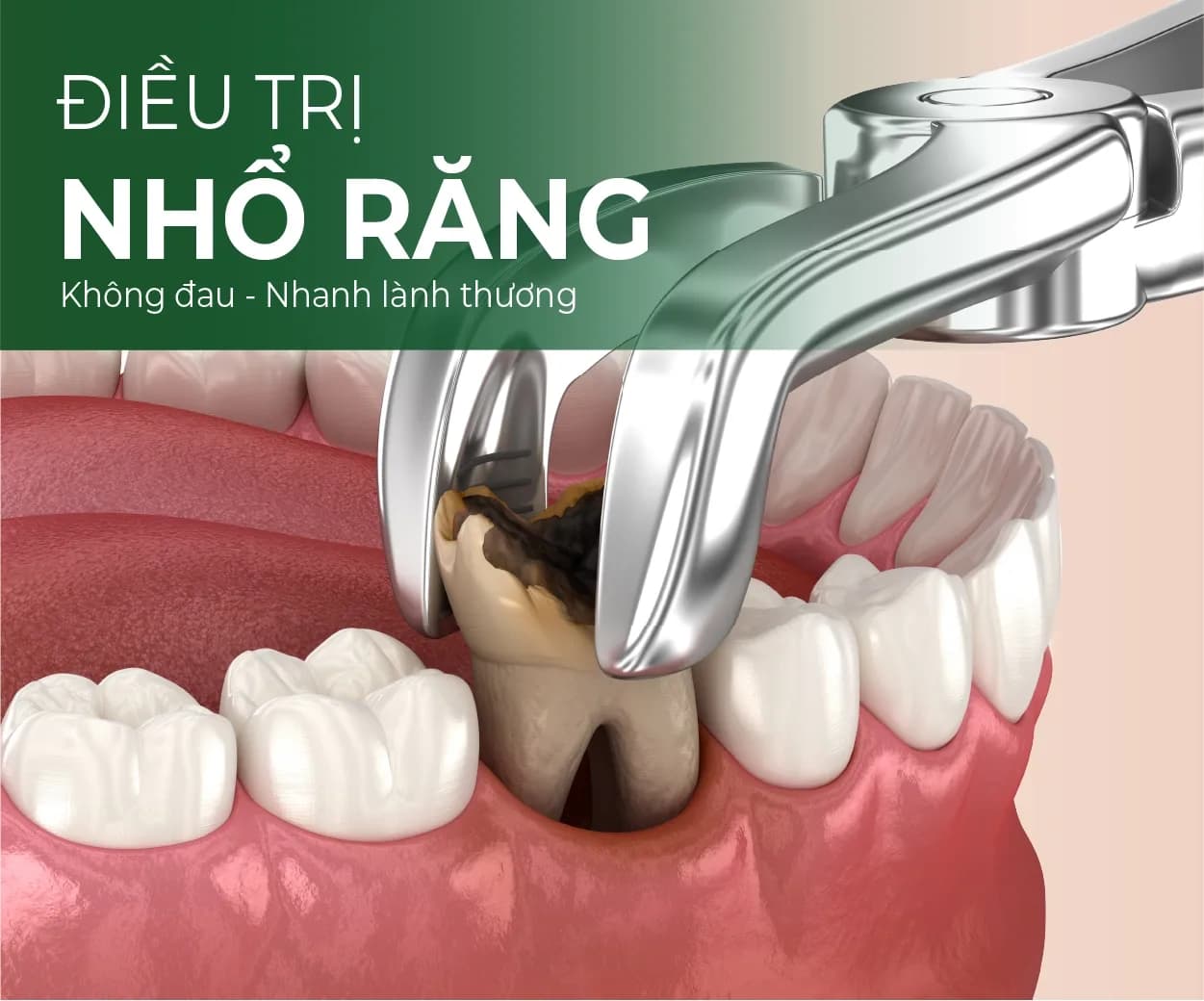
Once the enamel surface collapses into a cavity, the process cannot be reversed and a filling is required. If the cavity reaches dentine it spreads much faster, because dentine is softer than enamel. By the time it reaches the pulp chamber the only option left is root canal treatment — several times the cost, and the tooth permanently loses its blood supply.

The entire value of a six-monthly check-up sits here. It is not a ritual reminder; it is how a lesion is caught while it can still be handled with fluoride or a small filling, rather than at the stage that needs a root canal and a crown.
Calculus does not cause decay — it costs you teeth by another route

People tend to think a scale and polish is about whiter teeth and fresher breath. Those are side benefits. The medical reason is to prevent periodontal disease, the leading cause of tooth loss in adults — ahead of decay.

The mechanism goes like this: plaque mineralises into calculus at the neck of the tooth and spreads below the gum margin. Its rough surface holds bacteria against the gum tissue, causing chronic inflammation. Prolonged inflammation gradually resorbs the alveolar bone supporting the root. Bone that has resorbed does not grow back, and at some point the tooth loosens and is lost — even though it never had a single cavity.

What makes this dangerous is that the process is nearly painless until late. The one early sign you can see yourself is bleeding when you brush. Bleeding gums are not normal, and they are not caused by a hard toothbrush — they are inflamed gum tissue.

Once the cavity is large, a filling is no longer the best option

Directly placed composite shrinks slightly as it sets. In a small cavity that shrinkage is negligible. In a large cavity covering much of the biting surface, the accumulated shrinkage pulls on the cusps, causing pain on biting, creating microscopic gaps at the margin, and over time potentially cracking the wall of the tooth.

For those larger cavities, the more durable answer is an inlay or onlay — a ceramic restoration made outside the mouth from an impression, then bonded in. Because it is fully set before bonding, it does not shrink, it restores the correct contact point with the neighbouring tooth, and it withstands chewing loads far better.

The practical dividing line: a cavity that leaves enough sound tooth wall is well served by composite; one that has lost a wall or a load-bearing cusp is better served by an inlay or onlay; and a root-treated tooth with substantial structure loss should be crowned to protect it from a vertical fracture.

What is different here

How we do General dentistry

Free examination and X-ray

Every patient gets a full examination and a panoramic X-ray free of charge at their first appointment.

Microscope for root canal treatment

Magnified vision of the canals allows thorough cleaning, which substantially reduces the rate of recurrent infection.

Aesthetic composite fillings

Multi-shade layered material restoring the natural shape and colour of the tooth, so the filling does not show.

Digital patient records

Treatment history, X-rays and warranty cards held on one system and accessible at every clinic.

The process

4 steps

You know in advance what happens and how long each stage takes.

Before you come in

The first appointment includes a free examination and panoramic X-ray and takes about 30 minutes. If you are in pain, describe the type of pain clearly from the outset: pain on hot or cold food that stops as soon as the stimulus goes, or spontaneous pain at night with no trigger — those two point to different diagnoses and completely different treatment. Bring any previous records you have. If you have heart disease or diabetes, or take anticoagulants, tell us in advance so prophylactic antibiotics can be considered.

  1. 01

    Full examination and X-ray

    30 minutes

    Assessment of the whole dentition, detecting hidden decay, periapical lesions and the state of the gums.

  2. 02

    A treatment plan in order of priority

    15 minutes

    Acute problems first — pain and infection; then restorative work; and cosmetic work last.

  3. 03

    Treatment

    30 – 90 minutes

    Scaling, fillings, root canal treatment or periodontal treatment as indicated.

  4. 04

    Recall appointment

    Every 6 months

    An automatic six-monthly reminder by Zalo to keep your mouth healthy.

Aftercare

What to do at each stage

Most complications do not come from the treatment itself but from the days that follow. This is the guidance you are given when you leave.

After a filling

Do

  • Wait for the anaesthetic to wear off before eating, to avoid biting your cheek or tongue
  • Come back to have it adjusted if it feels high — even a slightly high filling causes lasting pain

Avoid

  • Chewing hard food on the filled tooth for the first 24 hours
  • Ignoring sensitivity that lasts beyond two weeks

After scaling

Do

  • Brush gently with fluoride toothpaste
  • Rinse with warm salt water if the gums feel sore for a day or two

Avoid

  • Very hot or very cold food on the first day if your teeth feel sensitive
  • Assuming that bleeding when you brush is normal and ignoring it

After root canal treatment

Do

  • Chew on the other side until the restoration is finished
  • Complete the crown or onlay within a few weeks as advised

Avoid

  • Putting off the restoration for months — an unrestored root-treated tooth fractures vertically very easily, and that usually means extraction
  • Biting hard objects with the tooth awaiting its crown

Lifelong maintenance

Do

  • A check-up and scale and polish every six months for the whole family
  • Brush twice daily with fluoride toothpaste and floss every evening
  • Snack on sweet things less often — frequency matters more than total sugar

Avoid

  • Waiting until it hurts: decay only causes pain once it is close to the nerve
  • Using toothpicks instead of floss, which widens the gaps and damages the gum
Cost

General dentistry and minor surgery price list

Examination and panoramic X-ray are free for first-time patients.

Prices include VAT. The final cost depends on your specific case, is fixed in writing after the examination, and does not change part-way through.

General dentistry and minor surgery prices at Dental Việt Nam

  • Examination and consultationFree per visit

  • Panoramic X-rayFree per visit

  • 3D Cone Beam CT scan500,000₫ per visit

  • Scale and polish300,000₫ per visit

  • Composite filling300,000₫ per tooth

    Warranty: 2 years

  • Ceramic inlay / onlay restoration3,000,000₫ per tooth

    Origin: GermanyWarranty: 5 years

  • Root canal treatment, front tooth800,000₫ per tooth

    Warranty: 5 years

  • Root canal treatment, molar1,800,000₫ per tooth

    Warranty: 5 years

  • Baby tooth extraction200,000₫ per tooth

  • Routine tooth extraction500,000₫ per tooth

  • Erupted wisdom tooth extraction1,200,000₫ per tooth

  • Impacted wisdom tooth extraction (Piezotome)2,500,000₫ per tooth

  • Fully bone-impacted wisdom tooth extraction5,000,000₫ per tooth

  • Laser gum contouring6,000,000₫ per case

    Warranty: 6 months

  • Gummy smile surgery with bone reduction25,000,000₫ per case

    Warranty: 12 months

Five things that decide the final figure

  1. The procedure

    Examination and a panoramic X-ray are free for first-time patients. Scaling from 300,000₫, composite fillings from 300,000₫, root canal treatment from 800,000₫ for a front tooth and 1,800,000₫ for a molar, which has more canals.

  2. Number of canals and difficulty of the root canal case

    A front tooth usually has one canal; a molar has three or four, sometimes with an accessory canal that is curved or calcified. Difficult cases need a microscope and more time.

  3. Cavity size and material

    A small cavity takes a single layer of composite. A large one needs incremental layering, rebuilding cusps and contact points, or moving to a lab-made ceramic inlay or onlay.

  4. How advanced the gum disease is

    A routine scale and polish is different from deep periodontal treatment with subgingival root planing in a patient who has already lost bone.

  5. Additional imaging

    The free panoramic X-ray is enough for most cases. A Cone Beam CT is only indicated where 3D reconstruction is needed, such as a suspected root fracture or unusual canal anatomy.

Comparing the options

Composite filling, ceramic inlay/onlay, or a crown?

Three levels of restoration for a decayed or broken tooth. The principle is to choose the lowest level that still protects the remaining tooth structure — overtreat and you lose healthy tissue, undertreat and it fails early.

Composite filling, ceramic inlay/onlay, or a crown?
CriterionComposite fillingCeramic inlay / onlayPorcelain crown
Suitable forSmall and medium cavities with sound walls remainingLarge cavities missing a wall or a cuspRoot-treated teeth, badly broken, extensive structure loss
Appointments122
Average lifespan3 – 5 years10 – 15 years10 – 20 years
Healthy tooth removedLeastModerateMost
CostFrom 300,000₫From 3,000,000₫From 1,500,000₫

The dentist's conclusion

Early decay in a small cavity should be filled with composite, and you should not be talked up to a crown. A large cavity in a molar taking heavy chewing load is better served by an inlay or onlay: more expensive, but three times the lifespan of a filling, so cheaper per year of service. For a root-treated tooth, a crown is not an upsell — it is what prevents a vertical root fracture.

Risks

Possible complications and how they are prevented

No medical technique carries zero risk. What makes the difference is knowing in advance where the risk sits and controlling it with a specific protocol.

Recurrent decay under a filling

Cause
An open margin from material shrinkage, decay not fully removed, or poor interdental cleaning after the filling.
Prevention
Layer the composite in thin increments to reduce shrinkage; check margins at every recall; floss daily around filled contact points.

Sensitivity or pulp inflammation after a deep filling

Cause
A deep cavity close to the pulp irritating it, or pulp inflammation that was already present silently.
Prevention
Place a pulp-protective liner in deep cavities; test the pulp before filling; review at 2 to 4 weeks where the cavity was close to the pulp.

Fracture of a root-treated tooth

Cause
A tooth without a nerve is no longer nourished and becomes brittle, particularly a molar under heavy load that was filled rather than crowned.
Prevention
Crown or onlay molars after root canal treatment; avoid chewing hard food on that tooth while waiting for the restoration.

Sensitivity and a feeling of gaps after scaling

Cause
Root surfaces that were covered by calculus are now exposed, and the space the calculus occupied has been cleaned out.
Prevention
Apply fluoride after scaling and use sensitive-teeth toothpaste for 1 to 2 weeks. The sensation fades and is a sign the gum tissue is recovering, not a sign that the tooth has been worn away.

Periapical infection after root canal treatment

Cause
Canals not thoroughly cleaned, an accessory canal missed, or an incomplete seal.
Prevention
Treat under a microscope so every canal is found; take a post-obturation X-ray; review at six months and at one year.
Frequently asked

Questions about General dentistry

No. The ultrasonic scaler vibrates to break calculus off the surface; it does not cut into enamel. Teeth feeling slightly sensitive for a few days afterwards is because root surfaces previously covered by calculus are now exposed, and it settles.

Book today,
and find out exactly where your teeth stand

A dentist examines you, takes a panoramic X-ray and explains what it shows using your own images. Free, even if you decide not to go ahead.

Open Monday – Sunday · 08:30 – 20:00 · Clinic in Hanoi

Zalo