
Skip navigation, go to main content
Orthodontics

Invisalign clear aligners

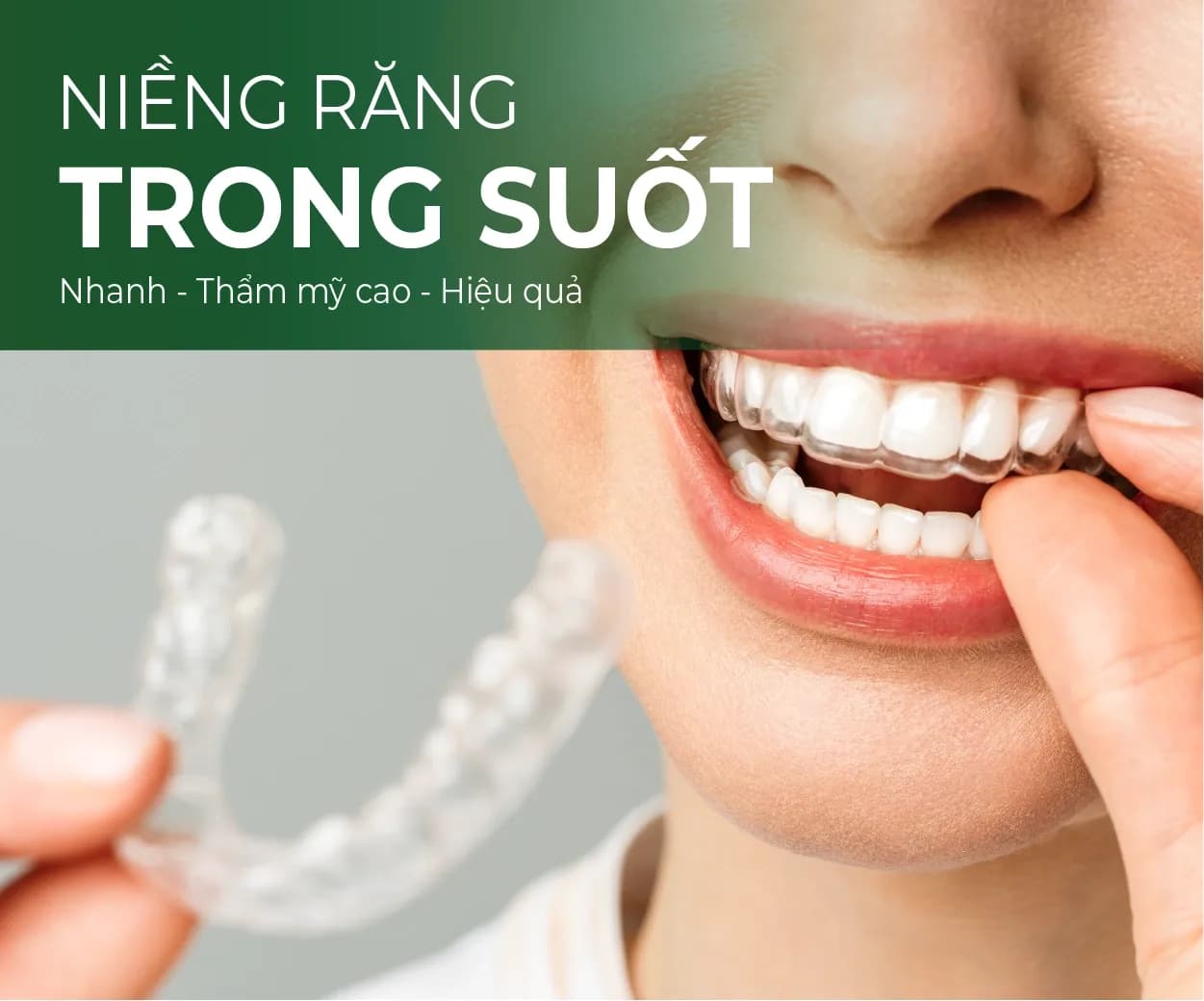
Invisalign uses a series of custom clear plastic trays, each moving the teeth a very small amount along a plan simulated in ClinCheck software. You see the final result at the first consultation, before treatment starts.

Indicative cost

45,000,000 135,000,000 per case

Duration
12 – 24 months
Appointments
Review every 6 – 8 weeks
Anaesthetic
Not required
Warranty
Aligners and retainers
Invisalign clear aligners at Dental Việt Nam

Invisalign clear aligners at Dental Việt Nam costs from 45,000,000₫ to 135,000,000₫ per case, takes 12 – 24 months, and is warranted for aligners and retainers. Prices include VAT and are the same at every clinic; the initial examination and panoramic X-ray are free. It suits patients with mild to moderate crowding and spacing and gaps in several places.

Who this is right for

  1. Mild to moderate crowding
  2. Spacing and gaps in several places
  3. Moderate deep bite, open bite or crossbite
  4. Working professionals who meet clients and need discretion
  5. Patients whose teeth relapsed after previous braces and stopping their retainer

Who should not have this

  • Severe skeletal discrepancies that need orthognathic surgery
  • Patients who will not wear the trays 20 to 22 hours a day
  • Active, untreated gum disease

If you fall into this group, the dentist will propose a more suitable option rather than proceeding anyway. It is exactly why the first appointment always includes an X-ray.

The clinical detail

What to understand before deciding on Invisalign

Three points a dentist usually ends up explaining in the chair — read them first and your consultation can get straight to the point.

How well aligners work depends on the type of movement, not the severity of the case

The question "is my case too severe for Invisalign" is usually the wrong question. Clear aligners are not weaker on severe cases — they are weaker on certain TYPES of movement, whether the case is mild or severe.

Aligners handle tipping crowns, closing spaces, mild arch expansion and rotating teeth with a flat cross-section very well. They are markedly harder work for intruding teeth, moving roots bodily along their axis, rotating round canines and premolars, or closing large extraction spaces — because a tray grips only the crown and has no mechanical purchase to transmit force down the root.

That is why the composite attachments bonded to the teeth are not an accessory but the main force-transmitting component, and it is why an honest plan sometimes concludes that your case should use braces, or braces for the difficult phase and aligners to finish.
ClinCheck is a simulation of the intention, not a promise of the outcome

The 3D video of teeth gliding into position is an excellent communication tool, but it simulates what the plan intends to happen. Real teeth move through real bone, and that depends on bone density, root shape, and how many hours a day you actually wear the trays.

In clinical practice, teeth falling behind the plan — known as loss of tracking — happens fairly often. The sign is that the tray no longer sits tight against the biting edge, leaving a visible gap when you bite down. Caught early it just needs adjusting; caught late, after several trays, it means a new scan and a set of refinement aligners.

Refinement aligners are normal in clear aligner treatment, not a sign that the dentist got it wrong. What you should ask before signing is: how many refinement rounds does this package include, and what is charged beyond that.

The retainer is what decides the result ten years from now

Teeth that have just been moved sit in bone that has not fully remodelled, and the ligament fibres around each root have an elastic memory pulling them back. The tendency to relapse is strongest in the first 6 to 12 months after finishing, and it never falls to absolute zero.

So retention is not a phase that follows treatment — it is a permanent part of the plan. The practical protocol is near full-time wear for the first few months, tapering to nights only, and night-time wear maintained long term.

Most of the "my teeth moved back after braces" cases we take on were not orthodontic failures. They are people who had a good result and stopped wearing their retainer after a year or two because the teeth seemed settled.

What is different here

How we do Invisalign

See the outcome in ClinCheck first

A 3D simulation of the entire tooth movement sequence, with you approving the end result before any aligner is ordered.

Taken out to eat and clean

No food restrictions, and you brush and floss normally — a substantially lower decay risk than with fixed braces.

Less discomfort, fewer emergencies

Light continuous force, nothing to debond, no wire digging into the cheek, no unscheduled visits.

Fewer review appointments

Every 6 to 8 weeks rather than every 3 to 4, which suits people who are busy or travel for work.

The process

5 steps

You know in advance what happens and how long each stage takes.

Before you come in

The first appointment needs about 60 minutes for the scan and X-rays, so do not book it tight against work. If you have decay, heavy calculus or inflamed gums, deal with those first — the trays fit closely, so anything left untreated gets worse once treatment begins. And have an honest answer ready to the question that matters most: will you actually wear the trays 20 to 22 hours a day? If you are not sure, braces are the better choice, and there is nothing wrong with saying so.

  1. 01

    Examination and iTero scan

    60 minutes

    A digital scan instead of silicone impressions, plus lateral cephalometric and panoramic X-rays to analyse the bite.

  2. 02

    ClinCheck plan and approval

    2 – 3 weeks

    The dentist builds the movement plan, sends it to Align Technology, and presents the 3D simulation to you.

  3. 03

    Aligners issued and attachments bonded

    60 minutes

    Composite attachment points are bonded to the teeth, with instructions on wearing, removing and caring for the trays.

  4. 04

    Wearing the aligners, with reviews

    12 – 24 months

    You change trays every 7 to 14 days at home and come in every 6 to 8 weeks so progress can be checked.

  5. 05

    Attachments removed, retainer fitted

    45 minutes

    Teeth are polished and a clear retainer is provided to hold the result long term.

Aftercare

What to do at each stage

Most complications do not come from the treatment itself but from the days that follow. This is the guidance you are given when you leave.

First week with each new tray

Do

  • Change trays in the evening so you sleep through the tightest phase
  • Use chewies for a few minutes daily so the tray seats fully at the biting edge

Avoid

  • Taking the tray out because your teeth feel tight — that feeling is the force working
  • Skipping ahead to the next tray to speed things up

Daily routine

Do

  • Wear them the full 20 – 22 hours, removing only to eat and clean
  • Rinse the trays in cool water with a soft brush and keep them in their case when out
  • Brush or rinse thoroughly before putting them back in

Avoid

  • Coffee, tea or soft drinks while wearing the trays
  • Soaking them in hot water or leaving them in a car in the sun — warped plastic is a ruined tray
  • Wrapping a tray in a napkin while eating out, which is the most common way people lose them

After treatment finishes

Do

  • Wear the retainer exactly to the tapering protocol
  • Keep your final aligner as a stopgap in case the retainer breaks
  • An annual check so any relapse is caught early

Avoid

  • Stopping the retainer because the teeth have felt settled for months
  • Waiting until you can clearly see movement before coming back — by then it usually means retreatment
Cost

What it costs, and what decides that

Five things that decide the final figure

  1. The aligner package, by complexity

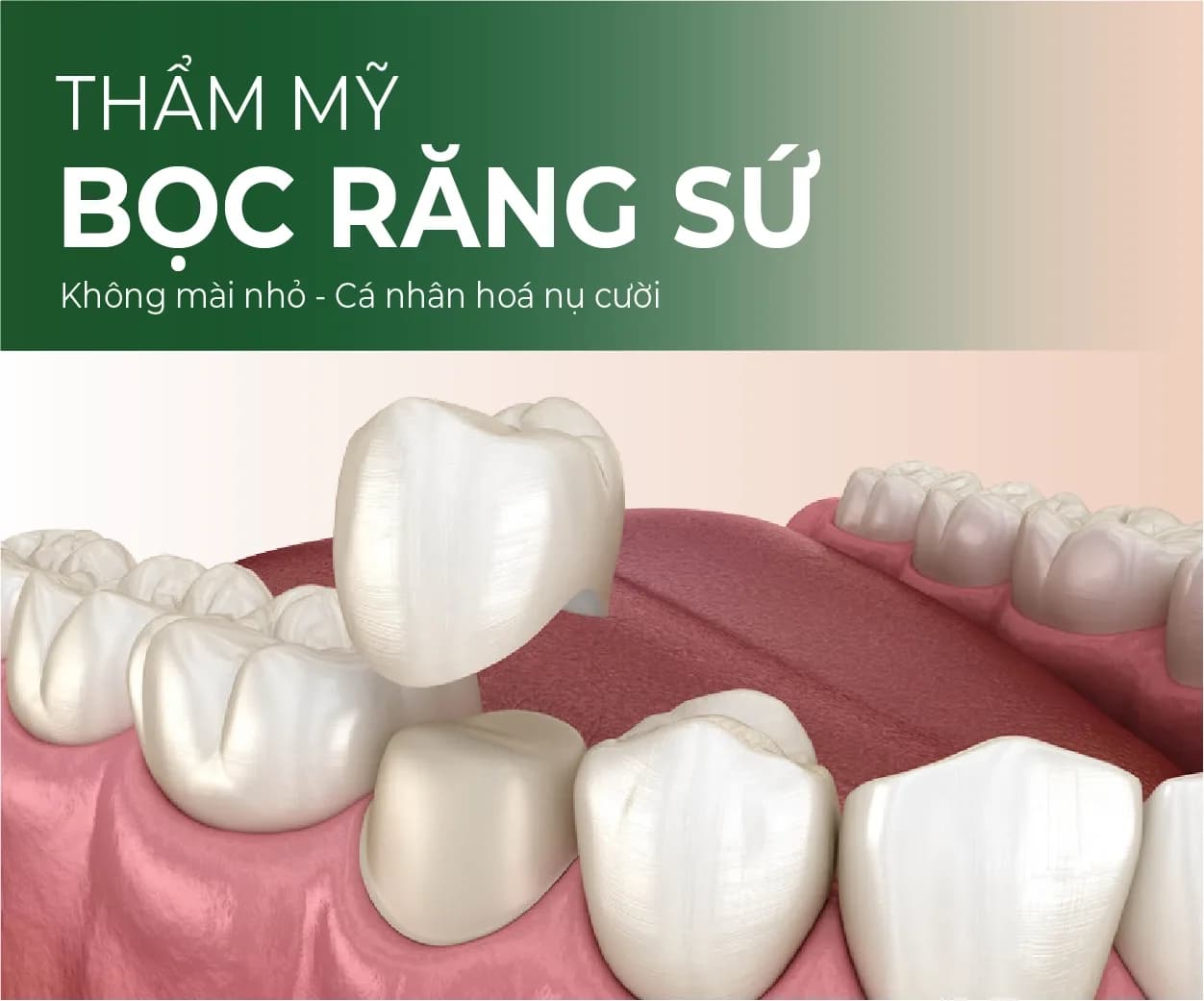
    Invisalign Lite limits the number of aligners and suits simple cases. Moderate allows more. Comprehensive is unlimited and includes refinements, for complex or long cases. This accounts for almost the entire 45 to 135 million₫ range.

  2. How many refinement rounds

    Lower packages usually include one. If you under-wear the trays and the teeth fall behind the plan, further rounds may be chargeable. Get this clause clear before you sign.

  3. Treatment needed before orthodontics

    Scaling, fillings, wisdom tooth extraction or periodontal treatment must all be completed first and are charged separately.

  4. Auxiliary appliances

    Mini-screws for anchorage, inter-arch elastics, or interproximal reduction to create space may be needed depending on the plan.

  5. Retainers and replacements

    The first set of retainers is included. Retainers are a consumable — lose or crack one and it has to be remade, and you will be using them for years.

Comparing the options

Invisalign or braces — an honest comparison

Both move teeth with light continuous force. They differ in how that force is delivered, and in how much the outcome depends on you.

Invisalign or braces — an honest comparison
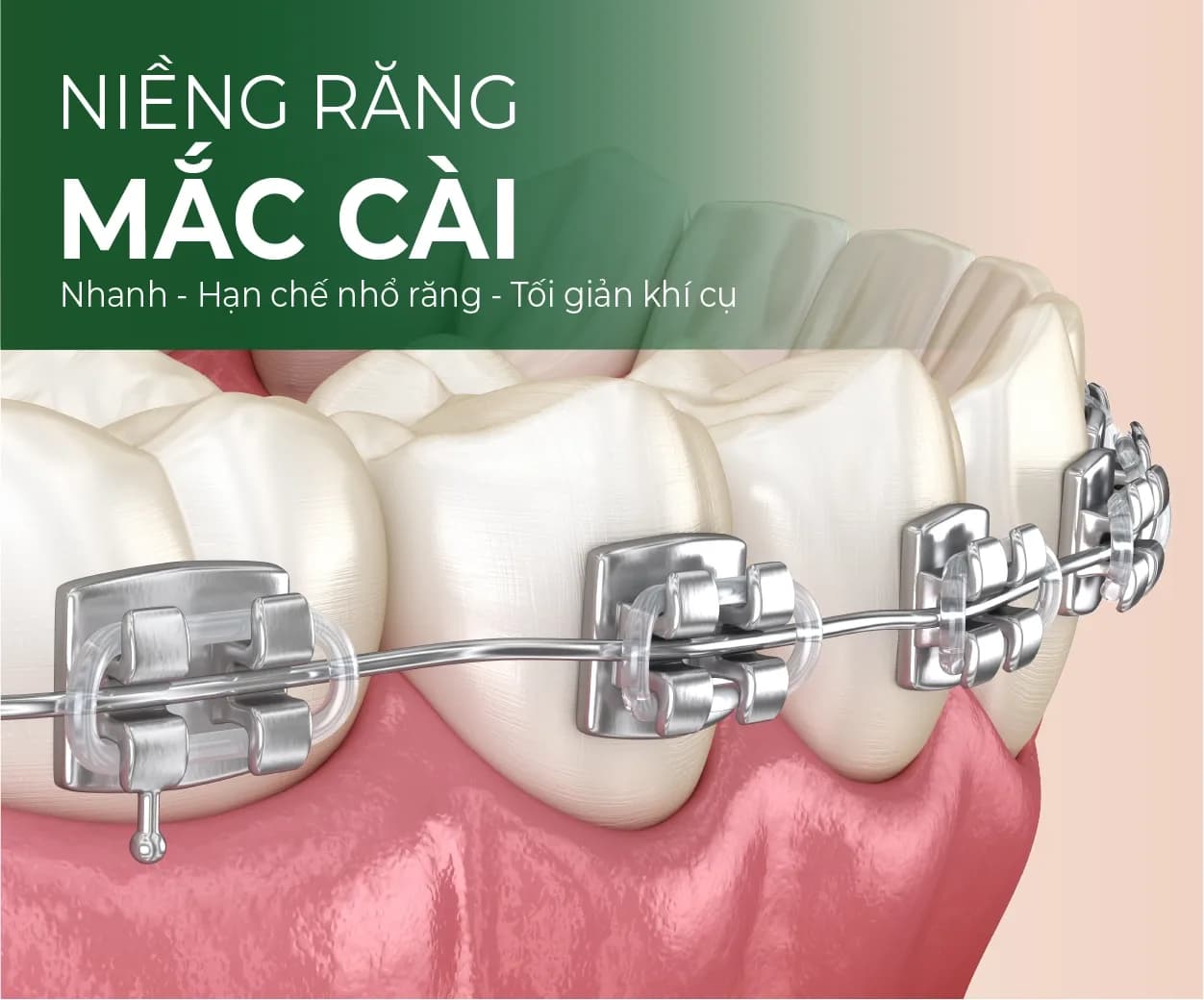
CriterionInvisalignMetal / ceramic braces
Appearance during treatmentVirtually invisibleClearly visible; ceramic less so
Depends on patient complianceVery heavily — under 20 hours a day and the plan slipsNo — the appliance is fixed to the teeth
Complex discrepancies, impacted teethLimited; some cases need braces alongsideBest control
Oral hygieneTaken out, so brushing is normalHarder, with a risk of demineralisation around brackets
Review frequency6 – 8 weeks3 – 4 weeks, plus any debonded brackets
Food restrictionsNone, as they are removed to eatYes — chewy, hard and sticky food
Cost45 – 135 million₫25 – 65 million₫

The dentist's conclusion

If you are disciplined and your work involves a lot of face-to-face contact, Invisalign is a far more comfortable experience with equivalent results in mild and moderate cases. If you know you are forgetful, or the case needs impacted teeth brought down or large extraction spaces closed, braces are both more reliable and cheaper. Choose on your own temperament and on the X-rays — not on which sounds more modern.

Risks

Possible complications and how they are prevented

No medical technique carries zero risk. What makes the difference is knowing in advance where the risk sits and controlling it with a specific protocol.

Teeth not tracking the plan

Cause
Wearing under 20 hours a day, changing trays off schedule, or a composite attachment debonding unnoticed.
Prevention
Check how closely the tray seats at every change; use chewies daily; report immediately if an attachment comes off or the tray lifts at the biting edge.

Root resorption

Cause
Excessive force over a long period, or moving teeth a long distance — a risk shared by all orthodontic methods, not specific to aligners.
Prevention
A comparison X-ray mid-treatment; slower movement in patients with short roots or a history of dental trauma.

Relapse after treatment

Cause
Stopping retainer wear too early, or wearing it inconsistently.
Prevention
Follow the tapering retention protocol and keep night-time wear long term; have the retainer checked annually for fit.

Decay and staining under the trays

Cause
Eating or drinking anything sweet or coloured while wearing the trays, which holds sugar and acid against the enamel.
Prevention
Water only while the trays are in; brush, or at least rinse thoroughly, before putting them back after eating.

An open bite at the back teeth at the end of treatment

Cause
The trays cover the biting surfaces, slightly intruding the back teeth during treatment.
Prevention
Plan for this effect from the outset and verify posterior contacts during the finishing stage.
Frequently asked

Questions about Invisalign

For mild and moderate cases, results are equivalent to braces. Severe skeletal discrepancies or complex cases needing impacted teeth brought down are still better controlled with braces. The dentist decides from the X-rays and models, not from preference.

Book today,
and find out exactly where your teeth stand

A dentist examines you, takes a panoramic X-ray and explains what it shows using your own images. Free, even if you decide not to go ahead.

Open Monday – Sunday · 08:30 – 20:00 · Clinic in Hanoi

Zalo