Skip navigation, go to main content
Cosmetic dentistry

Porcelain crowns

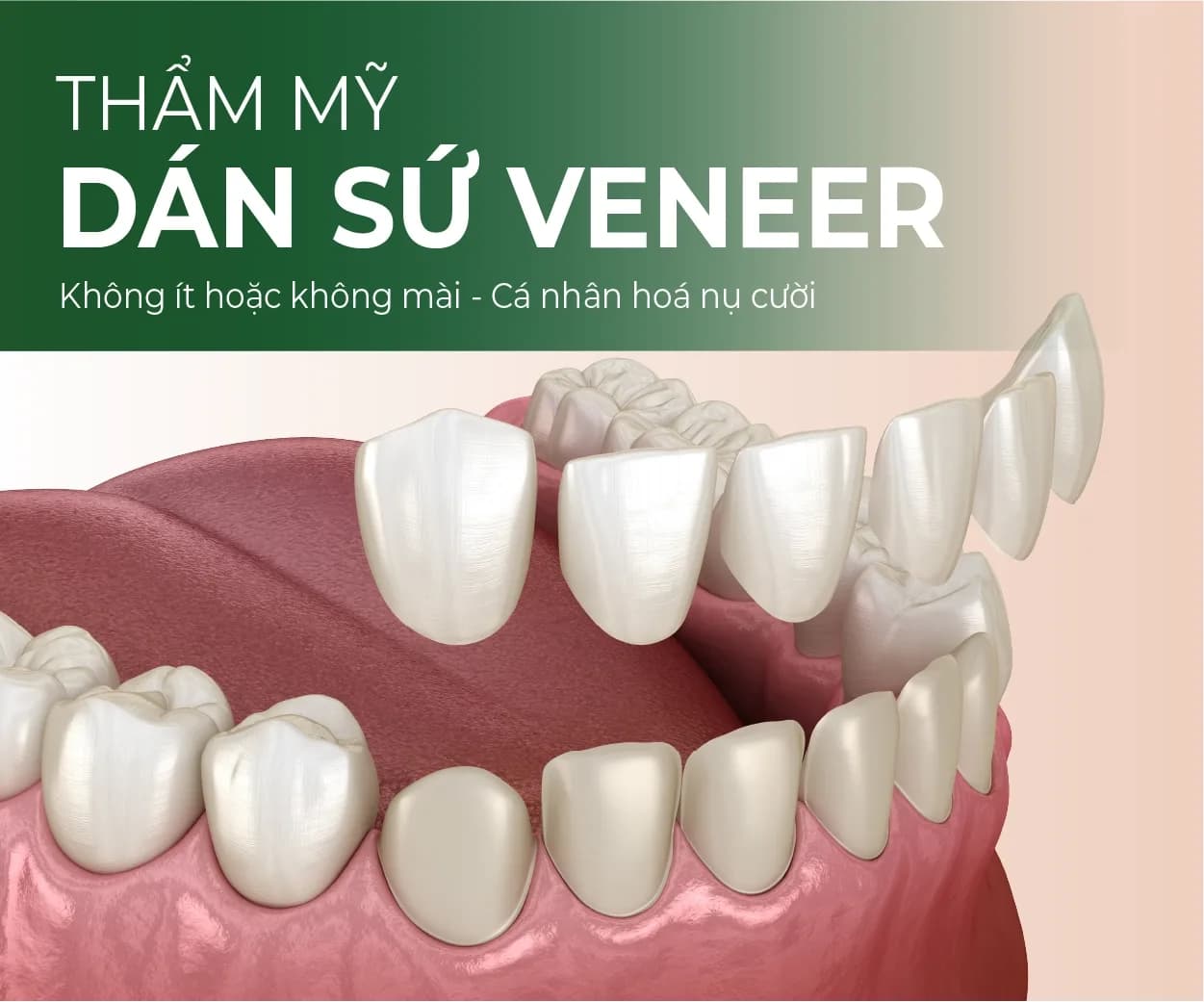
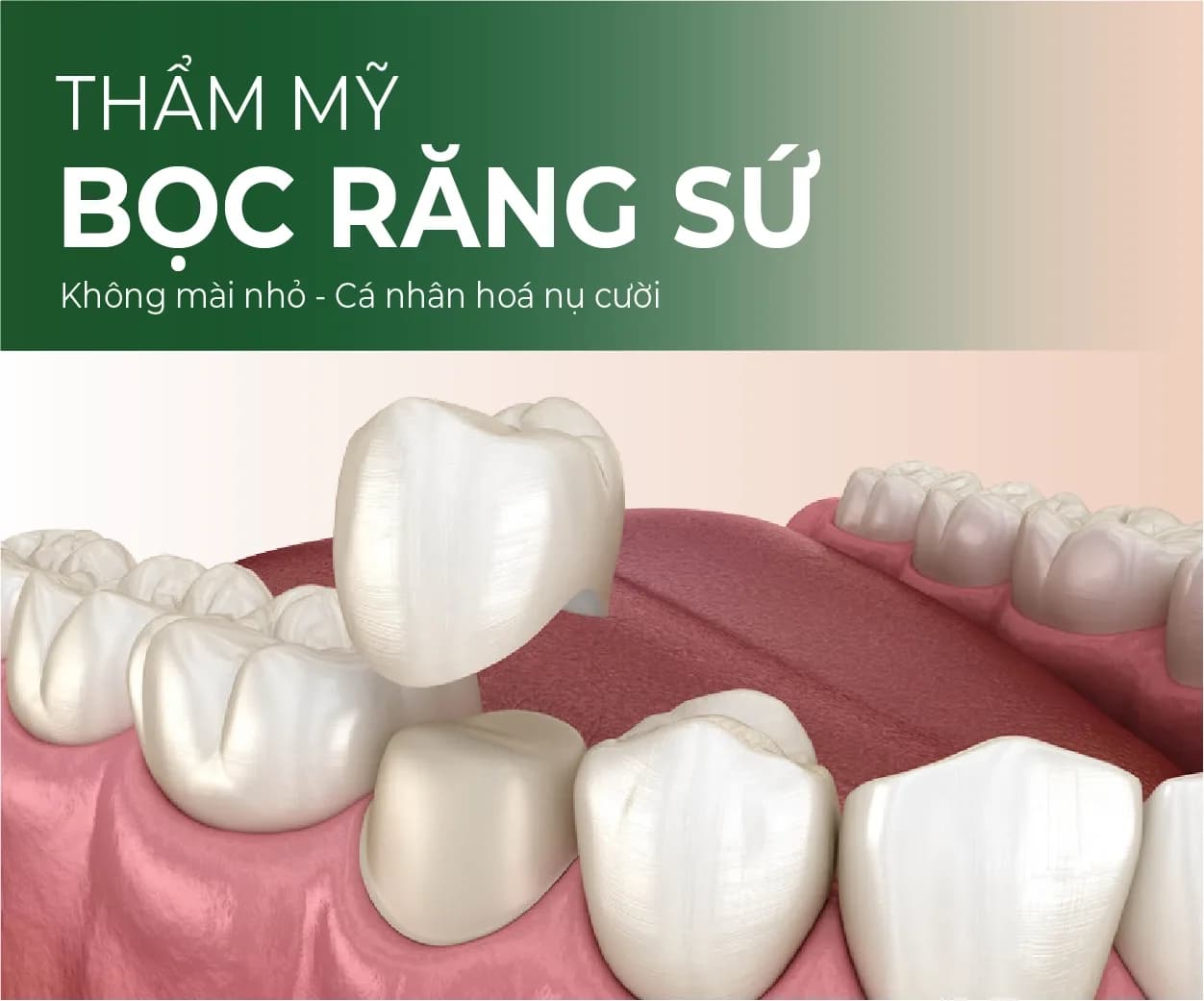
A porcelain crown restores the visible part of a tooth with a ceramic cap made individually from an impression of your own jaw. It addresses heavy staining, large chips, gaps between teeth and teeth whose shape is out of proportion. At Dental Việt Nam every case is designed in Digital Smile Design software before any preparation begins: you approve the shape of the teeth on screen first, and only then does treatment start.

Indicative cost

2,000,000 12,000,000 per tooth

Duration
2 – 4 days
Appointments
2 appointments
Anaesthetic
Local anaesthetic
Warranty
5 – 20 years depending on the ceramic
Porcelain crowns at Dental Việt Nam

Porcelain crowns at Dental Việt Nam costs from 2,000,000₫ to 12,000,000₫ per tooth, takes 2 – 4 days, and is warranted for 5 – 20 years depending on the ceramic. Prices include VAT and are the same at every clinic; the initial examination and panoramic X-ray are free. It suits patients with teeth stained by antibiotics or tetracycline, where whitening does not work and teeth badly chipped or broken by trauma or by decay already root-treated.

Who this is right for

  1. Teeth stained by antibiotics or tetracycline, where whitening does not work
  2. Teeth badly chipped or broken by trauma or by decay already root-treated
  3. Gaps and small spaces between teeth in a patient who does not want braces
  4. Teeth that are small, short or out of proportion with the face
  5. Mild crowding that needs improving quickly before an important event

Who should not have this

  • Crowding or a skeletal overbite or underbite — these need orthodontics or surgery, not crowns
  • Active gum disease with significant bleeding
  • Patients under 18, whose teeth are not fully developed

If you fall into this group, the dentist will propose a more suitable option rather than proceeding anyway. It is exactly why the first appointment always includes an X-ray.

The clinical detail

What to understand before deciding on Porcelain crowns

Three points a dentist usually ends up explaining in the chair — read them first and your consultation can get straight to the point.

Crown quality lives at the margin, not in the brand name of the ceramic

Patients compare Zirconia against Cercon, or Lava against Nacera, the way they would compare two phones. But most crowns that fail early do not fail because the wrong ceramic was chosen — they fail because the margin, the join between crown and prepared tooth, is not tight.

An acceptable margin has a gap under 100 micrometres, a clear shoulder or chamfer so the lab has room to build ceramic, and sits level with the gum or no more than 0.5mm into the gingival sulcus. Once the gap exceeds 200 micrometres the luting cement dissolves over time, bacteria get underneath, and the tooth inside decays again — while from the outside the crown still looks perfectly white and intact.

That is why the try-in appointment is never dropped to shorten a schedule, and why we take a bitewing X-ray after cementation: the film shows an open margin clearly, which both the naked eye and a dental probe can miss.


Whether the tooth still has a live nerve decides how long a crowned tooth lasts

A tooth with a living pulp is still nourished. Its dentine keeps its moisture and its elasticity, so it handles chewing forces well. A root-treated tooth has lost that supply: the dentine dries and grows brittle year by year, and the risk of a vertical root fracture climbs with it — and a vertical root fracture almost always ends in extraction.

So the rule at Dental Việt Nam is to keep the pulp wherever possible. Root canal treatment is only indicated on specific evidence: decay reaching the pulp chamber, a pulp test showing irreversible inflammation, or a lesion visible at the root apex. Taking the nerve out "so it will not be sensitive" or "to make preparation easier" is a wrong indication, and it takes decades off that tooth.

Where a tooth genuinely needs root treatment and has lost a lot of structure, the core is rebuilt with a fibre post and composite before preparation, rather than preparing straight into what little tooth is left.

The bite is what fails most quietly after crowns are fitted

Crowning 8 to 16 teeth at once means rebuilding the entire biting surface of the front of the mouth. If the closed-bite height ends up a few tenths of a millimetre higher or lower than where it physiologically sat, the chewing muscles and the jaw joint have to compensate.

The consequence does not show up in the chair. It arrives weeks to months later: jaw muscles aching on waking, clicking on opening, a dull ache at the temples, or one crown that keeps chipping at the same spot.

Articulating paper only shows where the contacts are. Occlusal force analysis also shows which contact lands first, what percentage of the load it takes, and how many milliseconds apart the two sides meet — that is enough data to adjust from, rather than grinding by feel and asking the patient whether it seems better.

What is different here

How we do Porcelain crowns

Your smile is designed before anything is prepared

Digital Smile Design simulates the new tooth shape over a real photograph of you. The plan is agreed before any instrument touches your own tooth.

Minimal tooth reduction

Depth-guided preparation through a silicone index removes only 0.5 – 1.2mm of enamel, conserving as much natural tooth as possible.

Metal-free full ceramics

Zirconia and Emax give natural translucency and will not leave the dark gum line that metal-backed crowns develop over the years.

Bite checked with instruments, not guesswork

Articulating paper combined with T-Scan occlusal force analysis, to avoid a high spot and the jaw-joint pain that follows one.

The process

5 steps

You know in advance what happens and how long each stage takes.

Before you come in

There is no need to fast — only local anaesthetic is used, and it is better to eat before the preparation appointment. Tell the dentist beforehand if you take anticoagulants or bisphosphonates for bone density, or if you have heart disease, diabetes or any allergy to local anaesthetic. The preparation appointment runs 60 to 90 minutes, so leave room in your day, and bring a photograph of a smile you like so the dentist understands what you actually want.

  1. 01

    Examination and X-ray

    30 minutes

    A panoramic X-ray to assess the roots, the pulp and the surrounding bone. The dentist advises how many teeth need crowning and which ceramic suits your case.

  2. 02

    Smile design

    45 minutes

    Digital impressions and a software simulation of the new tooth shape. You see the result in advance and approve the plan.

  3. 03

    Preparation and impressions

    60 – 90 minutes

    Local anaesthetic, depth-guided preparation, and impressions sent to the lab. Temporary crowns are fitted so you can eat and speak normally.

  4. 04

    Try-in

    30 minutes

    Shade and shape are tried in the mouth and adjusted to what you want before the ceramic is finally glazed.

  5. 05

    Cementation and aftercare briefing

    45 minutes

    Definitive cementation, bite check, cleaning instructions and your digital warranty card.

Aftercare

What to do at each stage

Most complications do not come from the treatment itself but from the days that follow. This is the guidance you are given when you leave.

First 24 hours

Do

  • Eat soft, cool food and chew on the side that was not treated
  • Brush normally but gently along the gum line around the new crowns

Avoid

  • Very hot or very cold food while the tooth is still sensitive
  • Pulling floss upwards and out at the treated teeth — it can lift a crown

First week

Do

  • Come back to have the bite adjusted as soon as anything feels high, however slightly
  • Note where and when sensitivity happens so the dentist can narrow down the cause

Avoid

  • Biting into tough or hard food with the front teeth
  • Putting up with a high spot on the assumption you will get used to it

Long term

Do

  • Scaling and a margin check every six months
  • Floss or a water flosser daily, particularly between crowned teeth
  • A night guard if you grind your teeth

Avoid

  • Using crowns to bite ice, bottle caps, bones or to open packaging
  • Skipping check-ups because nothing hurts — decay under a crown is almost painless until it is late
Cost

Porcelain crowns price list

Price is per tooth. 100% genuine branded porcelain, with only minimal reduction within safe limits.

Prices include VAT. The final cost depends on your specific case, is fixed in writing after the examination, and does not change part-way through.

Porcelain crowns prices at Dental Việt Nam

  • Diamond crown2,000,000₫ per tooth

    Origin: GermanyWarranty: 5 years

  • Katana crown3,000,000₫ per tooth

    Origin: JapanWarranty: 15 years

  • Zirconia crown3,500,000₫ per tooth

    Origin: GermanyWarranty: 20 years

  • Venus crown4,000,000₫ per tooth

    Origin: GermanyWarranty: 10 years

  • DDBio crown4,500,000₫ per tooth

    Origin: GermanyWarranty: 10 years

  • Cercon crown5,000,000₫ per tooth

    Origin: GermanyWarranty: 15 years

  • Emax crown6,000,000₫ per tooth

    Origin: USAWarranty: 25 years

  • Emax Press crown8,000,000₫ per tooth

    Origin: USAWarranty: Lifetime

  • HT Smile crown8,000,000₫ per tooth

    Origin: GermanyWarranty: Lifetime

  • Ceramill crown9,000,000₫ per tooth

    Origin: GermanyWarranty: Lifetime

  • Cercon HT crown10,000,000₫ per tooth

    Origin: GermanyWarranty: Lifetime

  • Nacera crown11,000,000₫ per tooth

    Origin: GermanyWarranty: Lifetime

  • Lava crown10,000,000₫ per tooth

    Origin: USAWarranty: Lifetime

  • Lava Plus crown12,000,000₫ per tooth

    Origin: USAWarranty: Lifetime

  • Lava Esthetic crown14,000,000₫ per tooth

    Origin: USAWarranty: Lifetime

  • Orodent White Matt crown15,000,000₫ per tooth

    Origin: ItalyWarranty: Lifetime

  • Orodent Gold crown18,000,000₫ per tooth

    Origin: ItalyWarranty: Lifetime

  • Orodent Translucent crown22,000,000₫ per tooth

    Origin: ItalyWarranty: Lifetime

  • Orodent Bleach crown24,000,000₫ per tooth

    Origin: ItalyWarranty: Lifetime

  • Sapphire crown25,000,000₫ per tooth

    Origin: USAWarranty: Lifetime

  • Ruby-S crown30,000,000₫ per tooth

    Origin: USAWarranty: Lifetime

Five things that decide the final figure

  1. The ceramic and the lab that makes it

    This is where the biggest difference sits. Titanium-based crowns have a metal substructure, which is why they cost less and why they leave a dark gum line later; monolithic zirconia is strong and suits molars; Emax Press is the most translucent and suits front teeth. Even for the same ceramic, a lab with a 5-axis milling machine and a skilled ceramist who layers shade by hand costs more than a general lab.

  2. How many teeth are treated

    The listed price is per tooth. A case of 2 to 4 teeth has to be shade-matched into the natural teeth on either side — harder and more time-consuming than doing a full arch of 16, even though the total is lower.

  3. The state of the tooth before restoration

    Root canal treatment, rebuilding a core with a post, gum contouring or periodontal treatment beforehand are all charged separately. This is also the part that advertised quotes tend to leave out to make the headline number look smaller.

  4. How digital the workflow is

    Smile design, digital scanning, depth-guided preparation indices and instrument-based occlusal analysis all raise the cost per case — in exchange for a result that is predictable before preparation and needs less adjustment afterwards.

  5. What the warranty actually covers

    A 20-year warranty that includes free remakes for material failure carries a higher provision than a 5-year one. Read the scope of the warranty rather than only the number of years.

Comparing the options

Crown, veneer or composite filling?

Three techniques improve the appearance of front teeth, but they differ in how invasive they are and what they are for. Choose the wrong one and you either remove healthy tooth for nothing, or you are back for a repair within months.

Crown, veneer or composite filling?
CriterionPorcelain crownPorcelain veneerComposite filling
Tooth reduction0.5 – 1.2mm around the whole crown of the tooth0.3 – 0.5mm on the front surfaceAlmost none
Root-treated toothPrimary indication — protects the tooth from fractureNot advised — the core is dark and brittleOnly for very small fractures
Heavily discoloured toothComplete coverage, best colour controlGood, but depends on the underlying shadeLimited, the shade difference tends to show
Average lifespan10 – 20 years10 – 15 years3 – 5 years
Cost per tooth2 – 30 million₫5 – 30 million₫0.3 – 1 million₫
Reversible back to the natural toothNo — a prepared tooth always needs coveringLow, but still possibleHigh

The dentist's conclusion

A tooth that is root-treated, badly broken, heavily discoloured or needs substantial reshaping is a correct indication for a crown. A tooth that is still sound with thick enamel, needing only colour and shape improved, is far better served by a veneer. A small chip at the incisal edge should be filled with composite first — there is no reason to prepare an entire healthy tooth for it.

Risks

Possible complications and how they are prevented

No medical technique carries zero risk. What makes the difference is knowing in advance where the risk sits and controlling it with a specific protocol.

Sensitivity lasting more than two weeks

Cause
Preparation came close to the pulp chamber, or the prepared tooth was not fully sealed during the temporary phase so the dentinal tubules were continuously irritated.
Prevention
Depth-guided preparation through a silicone index, a dentine sealing varnish applied immediately after preparation, and a temporary crown that actually fits rather than one put on to get through the day.

Pulp inflammation after crowning

Cause
The tooth already had chronic, symptom-free pulp inflammation and preparation tipped it into an acute phase.
Prevention
Pulp testing and reading the periapical film before preparation; review at two weeks and six months to catch it while it can still be treated through the occlusal surface.

Secondary decay under the crown

Cause
An open margin, cement dissolving over time, and plaque collecting at the crown edge where a toothbrush cannot reach.
Prevention
Check the fit with a bitewing X-ray after cementation; use floss or a water flosser at the crown margin daily and keep to six-monthly scaling.

A dark gum line after a few years

Cause
The metal substructure of a metal-ceramic crown oxidises and becomes visible as the gum recedes with age.
Prevention
Use metal-free full ceramics throughout the front of the mouth, and keep the margin out of the depth of the gingival sulcus.

A high spot, jaw fatigue, temporomandibular joint pain

Cause
A premature contact remains, or the closed-bite height has been changed from where it originally sat.
Prevention
Occlusal force analysis after cementation and a review at 5 to 7 days once the chewing muscles have adapted — a high spot should never be left for the patient to get used to.
Real results

Before and after Porcelain crowns

Photographed at our clinic, labelled with the specific treatment performed, and published with the patient's consent. Results vary with each patient's starting condition.

See before and after cases from other treatments
Before and after photographs of Nguyên Giao — 16 Emax porcelain crowns at Dental Việt Nam
Nguyên Giao16 Emax porcelain crowns
Before and after photographs of Châu Thị Mỹ Phượng — 16 Lava Plus porcelain crowns at Dental Việt Nam
Châu Thị Mỹ Phượng16 Lava Plus porcelain crowns
Before and after photographs of Châu Thị Viên Bích — 16 HT Smile porcelain crowns at Dental Việt Nam
Châu Thị Viên Bích16 HT Smile porcelain crowns
Before and after photographs of Phi Phi Aimee Smith — 16 Lava Plus porcelain crowns at Dental Việt Nam
Phi Phi Aimee Smith16 Lava Plus porcelain crowns
Before and after photographs of Arita Byssouth Young — 20 DD-Bio porcelain crowns at Dental Việt Nam
Arita Byssouth Young20 DD-Bio porcelain crowns
Before and after photographs of Huyền Trang — 16 Emax Press porcelain crowns at Dental Việt Nam
Huyền Trang16 Emax Press porcelain crowns
Before and after photographs of Diệu Linh Trần — 20 Orodent Gold porcelain crowns at Dental Việt Nam
Diệu Linh Trần20 Orodent Gold porcelain crowns
Before and after photographs of Cristina — 18 Cercon HT porcelain crowns at Dental Việt Nam
Cristina18 Cercon HT porcelain crowns

8 cases · swipe to see more

Frequently asked

Questions about Porcelain crowns

Preparation is done under local anaesthetic, so there is no pain during the appointment. Once the anaesthetic wears off there may be mild sensitivity for 1 to 2 days, particularly on teeth with a live nerve. It fades over the first week.

Book today,
and find out exactly where your teeth stand

A dentist examines you, takes a panoramic X-ray and explains what it shows using your own images. Free, even if you decide not to go ahead.

Open Monday – Sunday · 08:30 – 20:00 · Clinic in Hanoi

Zalo